A practical Vietnam offshoring checklist for Singapore founders and CTOs covering structure, compliance, hiring, tax, costs and scaling.
Language
Vietnam's software development landscape has shifted rapidly. In 2024–2026, the conversation is no longer about whether developers use AI tools- it is about how they use them, and whether the result is production-ready software or a growing pile of technical debt.
For Singapore firms building engineering teams across the Causeway, understanding the difference between a vibe coder and a disciplined AI-assisted developer is now a practical hiring and management decision.
The term vibe coding entered mainstream tech vocabulary in early 2025, coined by computer scientist Andrej Karpathy to describe a style of software engineering in which developers rely heavily on large language models (LLMs) to generate code from natural-language prompts.
Rather than writing logic line by line, a vibe coder describes what they want-the "vibe"-and iterates with an AI assistant until the code works.
Vietnamese media picked up on the trend quickly. VnExpress reported in October 2025 on developers who had adopted vibe coding for several months, describing how they focused on functionality and interface rather than deep understanding of the underlying code.
At the same time, Vietnam's coding community was visibly shifting from pure outsourcing to developing AI products, with Vietnam's workforce increasingly building proprietary AI applications for local and regional markets.
The contrast with AI-assisted engineering is important. Where vibe coding prioritises speed over correctness and maintainability, AI-assisted engineering integrates AI into a structured development lifecycle: specifications first, then AI-driven code generation for speed, followed by human-led design, testing, and stringent code reviews. Both approaches use the same coding tools, but the processes surrounding them are fundamentally different.
Vietnam has made AI a strategic national priority. The country projects a 39% year-on-year growth in AI adoption by 2025, ranks 38th globally in AI usage, and has attracted significant investment in AI infrastructure and research. Vietnam's tech environment is often compared to China's growth period around 1995-early, energetic, and accelerating.
The state is heavily investing in national AI infrastructure, and the country is recognised as a leading ASEAN innovation centre for AI startups, transitioning from IT outsourcing to developing high-value AI solutions.
This article is written for Singapore product leaders, CTOs, and founders who are considering or already running engineering teams in Vietnam and want to separate hype from practical reality.
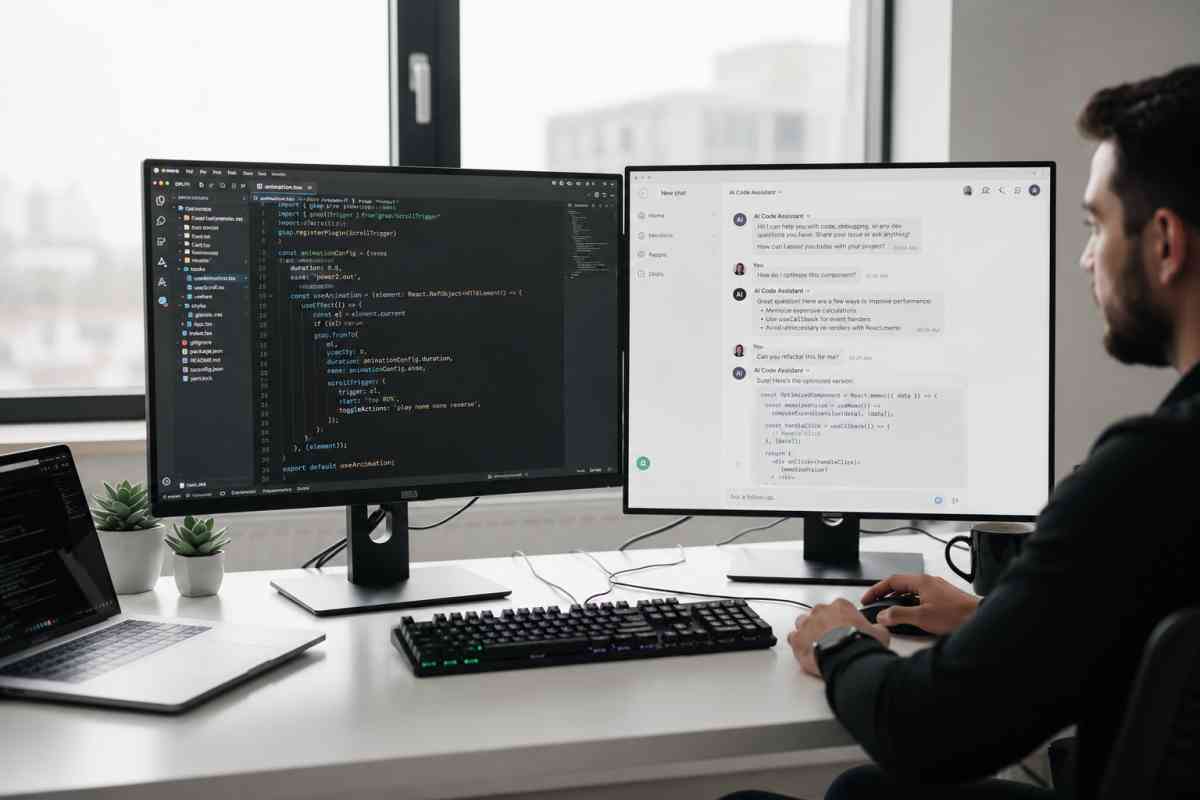
In Ho Chi Minh City, Hanoi, and Da Nang, many Vietnamese developers are adopting AI coding assistants as productivity tools and integrating them into daily work. Here is what a typical vibe coder workflow looks like across junior and mid-level teams in 2024–2026:
Common tools across Vietnam tech meetups and Facebook groups include Cursor, VS Code with Copilot, Claude desktop, and ChatGPT. Prompt sharing-in Vietnamese and English-is common in Telegram groups and local developer communities.
The issue is not that vibe coding exists. It is that without process guardrails, it creates a false and risky impression that working code equals production ready software.
AI-assisted engineering is what happens when a team treats AI code as a draft, not a deliverable. It sits within a mature software development lifecycle that includes specifications, architectural decisions, design reviews, unit and integration tests, and structured code reviews, with AI accelerating specific phases rather than replacing the process.
In 2025–2026, leading Vietnam teams working with Singapore and US clients have increasingly adopted spec-driven development. They write PRDs and technical design documents before touching an AI coding assistant. The AI agent then helps generate boilerplate code, refactor existing code, write initial test cases, and scaffold software components. But architecture, business logic, and security decisions remain human-led.
The productivity gains are real. AI-assisted engineering can increase development speed by 30%, according to industry research in Vietnamese journals, with iterative prompting raising initial AI code accuracy from roughly 48% to approximately 89%. A case study of a global consulting firm building remote teams across Singapore, Hong Kong, and Vietnam reported 40% cost savings while maintaining quality under compliance constraints.
The key contrast with vibe coding:
| Dimension | Vibe Coding | AI-Assisted Engineering |
|---|---|---|
| Primary goal | Speed, flow, experimentation | Maintainability, correctness, scale |
| Testing | Minimal or absent | Unit, integration, and automated tests |
| Code review | Optional or informal | Mandatory, structured |
| Architecture | Emergent, ad hoc | Designed, documented |
| Best suited for | Prototypes, throwaway weekend projects | Production systems, client-facing software |
| AI's role | Primary author | AI acts as an accelerator under human oversight |
Singapore employers should seek Vietnamese engineers who can switch between "exploration mode" (where vibe coding is acceptable) and "engineering mode" (where discipline is non-negotiable). Hyer Talents' employer-first approach focuses interviews and technical assessments on these habits: how candidates design, test, and review AI-generated code- not just how quickly they can prompt an LLM.

The data on AI-generated code quality is sobering. AI-generated code has 1.7 times as many major issues as human-written code. A systematic literature review published in a Vietnamese journal in 2025 found that first-draft AI code had a bug or vulnerability rate of approximately 31% and an initial accuracy of around 48%.
In May 2025, 170 out of 1,645 apps analysed had security issues traceable to AI code. In 2025, code refactoring dropped from 25% to under 10%, suggesting developers are accepting code suggestions with less critical examination.
The production consequences are measurable. In 2025, 16 of 18 CTOs reported production disasters caused by vibe coding or by AI code that was insufficiently reviewed.
Vibe coding can increase technical debt over time and lead to maintainability nightmares in production systems-unmaintainable code that no one on the team fully understands, logic errors buried across modules, and hidden bugs that surface weeks after deployment.
How this risk appears in Vietnam projects for Singapore firms:
A June 2026 arXiv preprint on vibe-coded application security highlighted specific vulnerabilities: overdelegation to AI, insufficient ownership, dependency risks, and testing gaps.
Practical guardrails Singapore employers should expect:
Vietnam has a multi-layered AI legal framework that classifies AI systems by risk level, with a regulatory framework emphasising responsible AI development.
Vietnam is also adopting frameworks for trust, transparency, and accountability in the AI context that matter when Singapore firms need compliance assurance from their Vietnam teams.
Hyer Talents can help Singapore employers define hiring scorecards that test for code review discipline, understanding of security basics, and experience cleaning up legacy AI code.
When a Singapore-based product owner leads a Vietnam squad that relies heavily on AI-assisted coding, expectations must be explicit from day one. Here is concrete guidance:
Set clear engineering standards:
Communication rhythms for Singapore–Vietnam overlap:
Treat AI as part of the engineering toolkit, not a black box:
Hyer Talents provides practical workforce support for Singapore employers: helping set up contracts, performance frameworks, and local HR policies that reward disciplined AI usage-not just raw output volume. The focus is on sustainable developer productivity, not just speed.
Recommended pod structure for a Singapore company:
| Role | Count | Purpose |
|---|---|---|
| Senior full-stack lead or architect | 1 | Owns architecture, enforces standards, reviews all significant PRs |
| Mid-level developers (AI-fluent) | 2–3 | Execute features using ai coding tools within defined standards |
| QA / automation specialist | 1 | Writes and maintains test suites, validates ai output quality |
Vietnam has a strong educational focus on Science, Technology, Engineering, and Mathematics (STEM), producing a steady pipeline of technically capable graduates. The prevailing attitude among Vietnamese developers is that AI will not replace programmers-but will change what programmers need to be good at.
There is growing demand for AI professionals across industries, though advanced AI research talent in Vietnam is relatively limited compared with larger global AI hubs.
Why senior oversight is non-negotiable:
Senior Vietnam engineers with strong engineering fundamentals are vital to supervise vibe coders. Think of AI coding assistants as producing junior developer code: it compiles and often runs, but it needs review for architectural fit, edge cases, business logic, and security.
Without a senior who understands engineering principles, the team may ship code that works today but becomes unmaintainable code tomorrow.
Complex tasks-system design, performance tuning, integration with existing systems-still require a steep learning curve that no AI agent can shortcut entirely.
Mentoring and pairing practices:
Hyer Talents has 15+ years of experience in Vietnam hiring and workforce development and can help employers find profiles that blend AI fluency, English communication skills, and disciplined engineering habits.
Hyer Talents supports employment, payroll, and workforce management in Vietnam, reducing hiring and setup friction for Singapore companies looking to scale responsibly.

When interviewing Vietnamese developers for ai assisted development roles, look for these signals:
Positive indicators:
Scenario questions to ask:
Communication and context engineering:
English communication matters. When Singapore product managers define work in English-language specifications, the developer must read the specs accurately, comment code clearly, and interact with non-Vietnamese stakeholders without ambiguity. Assess whether candidates can write technical documentation, not just prompts.
Hyer Talents applies an employer-first process: combining executive-search discipline with local Vietnam execution to shortlist AI-savvy developers who fit international standards.
The focus is on engineering discipline, communication standards, and fit with international processes-not volume-based hiring.
Hyer Talents provides structured workforce support for Singapore-headquartered firms building engineering teams in Vietnam. Here is what that looks like in practice:
Hyer Talents supports employment, payroll, and workforce management in Vietnam. Build your Vietnam team with confidence.
Vibe coding and AI-assisted programming are now part of everyday software development in Vietnam's fast-growing tech hubs.
The AI revolution in generative AI and code generation has changed how code is written, how software components are built, and how quickly teams can move from idea to working prototype. Google Cloud AI and other platforms continue to accelerate what is possible.
But the fundamentals of software engineering have not changed. Singapore employers should not fear AI-heavy workflows-but must insist on structured AI-assisted engineering practices to protect code quality and long-term maintainability.
The difference between a team that vibes and a team that delivers is not the tools they use, but the standards they follow.
In summary:
Look at pull requests closely. If large code blocks appear without clear comments, tests, or design rationale, that is a warning sign. Ask candidates to walk through a recent feature line by line, explaining their decisions rather than attributing everything to AI suggestions.
Check for basic security and performance awareness-if they cannot explain trade-offs in their own code, they may be accepting AI-generated code blindly.
Hyer Talents can incorporate these checks into technical interviews and coding exercises for Singapore employers, applying rigorous standards rather than surface-level screening.
Early-stage startups can use vibe coders effectively for prototypes and internal tools, provided a senior engineer-whether in Singapore or Vietnam- owns architecture and reviews.
For customer-facing production systems, insist on AI-assisted engineering practices: tests, code review, and clear documentation. A phased approach works well: start with a small, supervised Vietnam team, measure code quality and velocity over two to three sprints, then scale headcount once processes are stable.
Hyer Talents helps startups think through this phasing, including contract structures and workforce management in Vietnam.
For straightforward tasks-CRUD APIs, UI scaffolding, test boilerplate-teams may see 30–50% time savings. The development speed mentioned in early adoption reports is real for these use cases.
However, for complex, multi-service systems, productivity gains are smaller unless the team has strong design and review habits. Sustainable gains come from process improvements-not just installing an AI coding assistant plugin.
Track concrete metrics: lead time for changes, bug rates, and support load before and after introducing AI tooling to your Vietnam team.
Hyer Talents combines 15+ years of Vietnam hiring experience with an employer-first process focused on long-term workforce outcomes, not just placements.
The firm supports employment, payroll, and workforce management in Vietnam, giving Singapore companies a single partner for recruitment and ongoing workforce operations.
For AI-assisted development roles, Hyer Talents pays specific attention to engineering discipline, communication standards, and fit with international processes.
The focus is on clear communication, international standards, and practical workforce support-not volume-based hiring.
HR and payroll fundamentals are similar regardless of AI use, but employers should ensure that contracts include robust IP protection and confidentiality clauses, given the increased use of AI coding tools that may process proprietary code or data.
Update internal policies to cover acceptable use of AI tools, data handling, and code review expectations for Vietnam-based staff. Singapore companies typically prefer a partner that can coordinate payroll, benefits, and HR policies in line with Vietnam regulations.
Hyer Talents supports employment, payroll, and workforce management in Vietnam, helping to align HR structures with how modern AI-assisted teams actually work.


A practical Vietnam offshoring checklist for Singapore founders and CTOs covering structure, compliance, hiring, tax, costs and scaling.
Vietnam developers are embracing AI fast. Here’s how Singapore firms can separate true engineering discipline from risky vibe coding.

Build a high-performing Vietnam remote team with the right hiring model, communication rhythm, compliance, onboarding and leadership.

See which roles offer the strongest offshore value in Vietnam for Singapore startups and SMEs, based on cost, talent and management needs.

Should you use an EOR or open a Vietnam entity? Compare speed, cost, control, compliance, and the right choice for each growth stage.

Vietnam can cut hiring costs 40–60%, but startups need the right model, contracts, payroll, and management plan.

A practical guide for Singapore firms building Vietnam offshore development teams with the right roles, costs, process, and local support.

Compare Singapore vs Vietnam developer hiring costs, salaries, hidden fees, speed, and talent quality before building your next tech team.

A practical 2026 guide for Singapore companies hiring Vietnam staff through EOR without costly entity setup.

Singapore companies can hire Vietnam employees without opening an entity. Here’s the EOR route, costs, risks, and first steps.