A practical Vietnam offshoring checklist for Singapore founders and CTOs covering structure, compliance, hiring, tax, costs and scaling.
Language
Singapore startups and SMEs looking for the best roles to offshore to Vietnam will usually see the strongest results in software development, digital marketing and SEO, customer support, finance and accounting, UI/UX design, data entry and admin work, and QA testing.
Singapore startups and SMEs face a familiar squeeze: rising local salaries, fierce competition for talent, and pressure to scale efficiently on limited runway.
Offshoring selected roles to Vietnam has become a practical response because it gives growing companies access to skilled professionals at lower cost without adding the same hiring pressure they face locally.
Vietnam has a population of about 102 million (2026), is just a short flight from Singapore, and is in a similar time zone, making real-time collaboration easier across teams.
This guide focuses on which offshore roles in Vietnam deliver the best return for Singapore companies, how to assess them based on cost savings, management complexity, and fit for your business stage, and how to choose the right mix of roles as you scale.
Vietnam's competitive labour market can extend the financial runway for startups, while its growing talent pool, strong ties to Singapore, and stable position in ASEAN continue to attract offshoring from Singapore companies across industries.
With 15+ years of Vietnam hiring and workforce experience, Hyer Talents has built a clear picture of which roles work well offshore-and which need careful structuring before they deliver value.
Not every role translates well offshore. We evaluated each function against practical criteria that determine whether offshoring to Vietnam will genuinely serve Singapore businesses:
These criteria reflect what actually matters in execution-not theoretical advantages. The roles below passed on all counts.
Software development tops the list for good reason. Vietnam has a well-developed tech ecosystem with strong capabilities across various IT functions and is considered the best offshoring destination for tech talent by a growing number of Asia-Pacific companies.
Why It Stands Out: Vietnam produces over 50,000 IT graduates annually from more than 150 higher education institutions, feeding a tech workforce of over 530,000 professionals. Vietnam has a growing pool of skilled developers and engineers across web, mobile, cloud, AI/ML, and DevOps. The Vietnamese government supports foreign investment in technology sectors, reinforcing the talent pipeline. Vietnam is an attractive destination for tech talent.
Best For: Tech startups, SaaS providers, fintech companies, and firms pursuing digital transformation initiatives. Companies can quickly scale engineering and operational teams in Vietnam without the delays common in Singapore's tight market.
Key Strengths:
Possible Limitations: Senior architecture roles and highly regulated domains may require Singapore-based technical oversight. Communication protocols-remote code reviews, documentation standards-need to be established early.

Vietnam's digital economy is expanding quickly. A 2026 survey found that approximately 73% of employers in Vietnam identify digital and AI-related skills as an urgent upskilling priority-evidence that the market is producing talent oriented toward digital services and marketing technology.
Why It Stands Out: Access to social media managers, content creators, SEO specialists, and analytics professionals at a fraction of Singapore costs. Digital marketing roles are well suited to remote management with clear KPIs.
Best For: SMEs needing to expand their online presence, e-commerce businesses, consumer brands, and content platforms focused on international growth.
Key Strengths: Creative skills across platforms (Facebook, TikTok, Google), measurable ROI, and the ability to run multi-channel campaigns cost-effectively.
Possible Limitations: Market knowledge for Singapore customers may need to be built. Brand voice alignment requires structured briefing and ongoing feedback. English marketing content should be reviewed for nuance.
Customer support is one of the most proven offshore functions globally, and Vietnam's major cities- Ho Chi Minh City, Hanoi, and Da Nang- produce a steady supply of English-proficient service professionals.
Why It Stands Out: Vietnam offers 24/7 coverage potential with cost efficiency that is difficult to match locally. BPO-style customer support seats in Vietnam cost 60–70% less than equivalent positions in Singapore.
Best For: E-commerce businesses, SaaS companies, subscription services, and any firm where customers expect responsive chat, email, or voice support across time zones.
Key Strengths: English proficiency in customer service roles scores above the national average, and many candidates operate at B2 level or higher. Work ethic and dedication to process are strong across the workforce.
Possible Limitations: Complex product knowledge transfer requires investment. Cultural training around brand voice and customer empathy takes time. Escalation protocols should remain locally managed.
Vietnam's finance and accounting professionals are increasingly comfortable working across Vietnamese Accounting Standards (VAS) and international standards, including IFRS. Outsourcing these functions can reduce costs by 30–40% compared to maintaining a fully in-house team in Singapore.
Why It Stands Out: Standardised, repeatable tasks-bookkeeping, accounts receivable/payable, monthly reporting, tax preparation-are well suited to offshore execution. Providers increasingly offer cloud-based dashboards and real-time reporting.
Best For: Growing SMEs needing financial discipline, multi-entity reporting, cash flow forecasting, and audit readiness. Singapore companies must file an Annual Return with ACRA each year, and having reliable back-office support functions for ongoing compliance makes this manageable. Vietnam's corporate tax rate is 20% for local companies, while Singapore's corporate tax rate is capped at 17% for companies-understanding cross-border tax structures matters.
Key Strengths: Attention to detail, proficiency with accounting software, and familiarity with regulatory environments. Automation tools are delivering 20–25% efficiency gains in finance process outsourcing.
Possible Limitations: Singapore-specific compliance (GST, CPF, payroll regulations) requires onboarding. Confidentiality and cross-border data protection must be addressed in contracts. Vietnam requires an Overseas Investment Registration Certificate for outbound investments, and Vietnamese investors must report on offshore investment performance periodically-relevant context for companies structuring operations across both countries.
Vietnam's creative talent pool is expanding, particularly in Hanoi and Ho Chi Minh City where clusters of design agencies and freelance professionals serve international clients.
Why It Stands Out: A growing pool of designers trained in international best practices, proficient in Figma, Sketch, and Adobe tools, with exposure to user-centred design methodologies.
Best For: Startups developing apps, websites, or digital products-especially those in the market for consumer-facing interfaces or undergoing digital transformation.
Key Strengths: Competitive rates for high-quality prototyping, wireframing, and visual design. Iterative design cycles are far more affordable offshore than in Singapore.
Possible Limitations: Design philosophy and cultural aesthetics can differ. Structured feedback loops, clear design briefs, and alignment on brand guidelines are essential. Personal relationships between designers and product leads help bridge gaps.
Routine operations-data entry, invoice processing, HR administration, virtual assistant roles-are among the simplest functions to offshore and deliver immediate cost savings.
Why It Stands Out: High accuracy, reliable throughput, and substantial per-seat savings. Junior data operations or VA roles in Vietnam typically cost $1,100–$1,500 per month, compared with $3,500+ SGD equivalent in Singapore.
Best For: SMEs with high-volume repetitive tasks, e-commerce or logistics back-office needs, and companies needing data processing or KYC support.
Key Strengths: Precision, reliability, scalability, and fast setup. These roles require minimal domain knowledge transfer and can be operational within weeks.
Possible Limitations: Limited decision-making scope. Supervision and quality control (error rates, timeliness) remain important. Tasks lacking variety can create retention challenges.
Vietnam hosts established QA firms-Lotus Quality Assurance, S3Corp, HDWEBSOFT, Enclave, among others-offering manual testing, automation, performance testing, and security testing. Many hold ISTQB certifications and ISO standards.
Why It Stands Out: A systematic testing culture with rates averaging $15–24/hour depending on project complexity. Several providers operate 24/7 or follow-the-sun models for continuous test cycles.
Best For: Software companies, app developers, and digital service providers where product quality directly affects revenue and reputation.
Key Strengths: Thorough testing processes, automation tool expertise, and mature defect reporting. QA teams can scale quickly to match release cycles.
Possible Limitations: Domain-specific knowledge transfer is required upfront. Testing environment setup and automation infrastructure carry initial costs. Vendor continuity should be evaluated.

| Role | Best For | Cost Impact | Management Complexity |
|---|---|---|---|
| Software Development | Tech startups needing scalable dev teams | 40–60% savings | High |
| Digital Marketing | SMEs requiring cost-effective marketing expansion | 50–60% savings | Medium |
| Customer Support | Businesses needing 24/7 customer coverage | 60–70% savings | Medium |
| Finance & Accounting | Growing companies requiring financial support | 30–40% savings | Medium |
| UI/UX Design | Startups developing user-focused digital products | 40–50% savings | Medium-High |
| Data Entry & Administrative | SMEs with high-volume routine tasks | 60–70% savings | Low |
| QA Testing | Software companies ensuring product quality | 40–55% savings | Medium-High |
Vietnam also offers lower manufacturing costs for physical products and supply chains, making it relevant beyond purely digital roles for companies operating business overseas.
Your startup stage shapes which roles to offshore first. Early-stage companies benefit most from offshoring administrative tasks, data entry, and bookkeeping, freeing founders to focus on product and customers.
Growth-stage firms should consider software development, QA, customer support, and digital marketing to scale efficiently. Post-product-market-fit companies with proven revenue may offshore more senior functions, such as finance controllers, UX leads, or dedicated engineering teams.
Standardised, repeatable roles deliver the greatest savings per dollar spent. Customer support and data entry seats offer the highest percentage savings. Software development and UI/UX design deliver high value per role but require higher per-seat investment at senior levels. Proper planning around setup costs and management overhead prevents surprises.
Lower-complexity roles (data entry, basic admin) need minimal domain knowledge transfer and can be managed with lightweight oversight. Customer support and finance roles require more structured onboarding.
Software development, UI/UX design, and QA testing demand documented processes, version control, code review, and design systems. Assess your team's capacity to manage remote functions before committing.
Match the role to your business needs:
Hyer Talents supports employment, payroll, and workforce management in Vietnam. Whether you need a dedicated team of two or twenty, the process is designed to reduce friction: recruitment, EOR support, payroll coordination, HR support, and workforce management are handled with employer-first discipline.
Launch time for most BPO roles is typically four to six weeks. Success depends on matching the right role with the right partner.
Enterprise Singapore and other government support channels can also help Singapore businesses explore business opportunities in the Vietnam market and other countries across Southeast Asia.
The best role to offshore depends on your business needs, growth stage, and capacity to manage remote teams. Vietnam offers skilled talent across multiple functions-from software development and QA to finance, customer support, and creative design.
Vietnam suffers less from natural disasters than other ASEAN countries, and with average summer temperatures ranging from 25 to 30 degrees Celsius, it provides a stable and comfortable business environment for year-round operations.
Vietnam has a stable economy and supportive policies for foreign investment, making it an ideal environment for foreign companies and foreign investors looking to expand.
Local Vietnam execution matters. Working with a trusted partner who understands both business culture and business practices on the ground-who can manage office space, workforce operations, and clear communication to international standards-makes the difference between a successful offshore team and a costly experiment.
Foreign ownership structures, post-incorporation compliance, a bank account, a company secretary, and a work pass for any on-ground leadership are all practical considerations that require the right support.
For large enterprises and startups alike, Vietnam's combination of a deep talent pool, cost efficiency, and geographic proximity to the Asia Pacific region makes it a compelling choice.
The outsourcing and offshoring process is not about finding the cheapest option-it is about building durable teams with the right technology, management, and investment in people.
Build your Vietnam team with confidence. If you are evaluating which roles to offshore, start with one function, measure results, and expand from there.
Read more posts on workforce management and offshoring strategy, or speak with Hyer Talents about practical next steps for your offshore company setup in Vietnam.


A practical Vietnam offshoring checklist for Singapore founders and CTOs covering structure, compliance, hiring, tax, costs and scaling.

Vietnam developers are embracing AI fast. Here’s how Singapore firms can separate true engineering discipline from risky vibe coding.

Build a high-performing Vietnam remote team with the right hiring model, communication rhythm, compliance, onboarding and leadership.
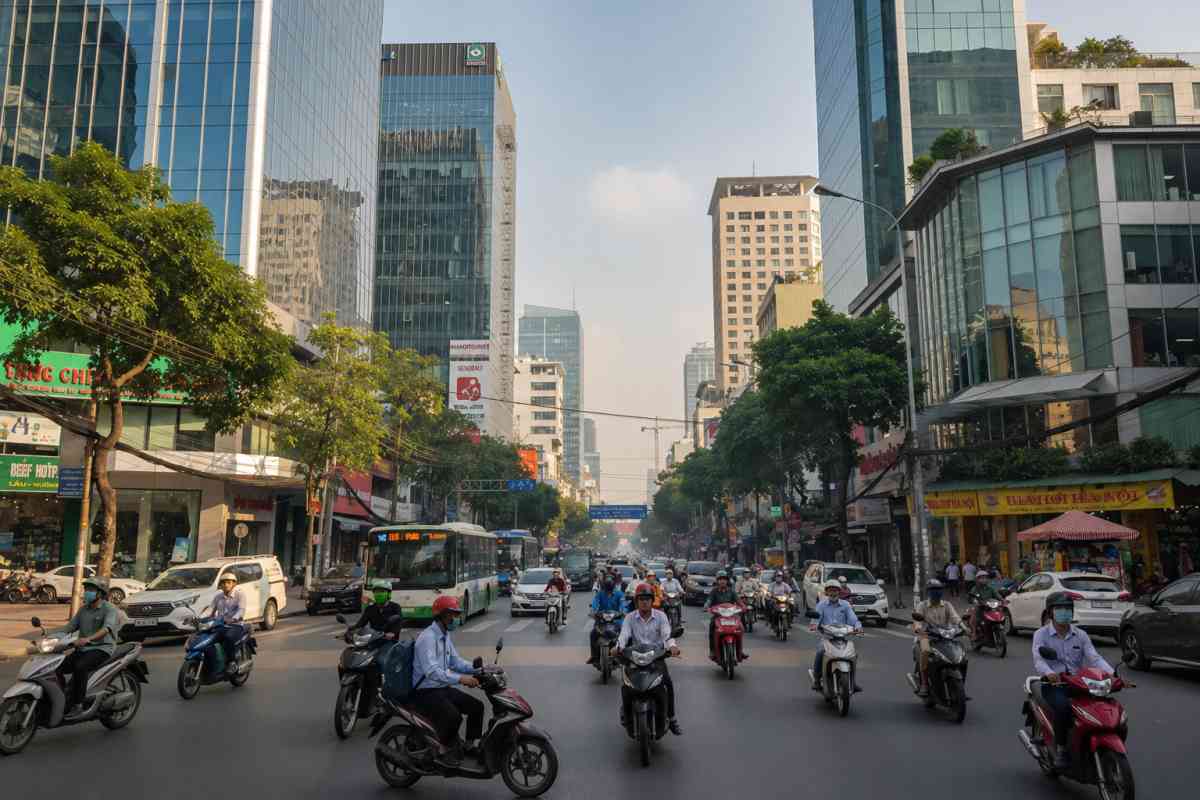
See which roles offer the strongest offshore value in Vietnam for Singapore startups and SMEs, based on cost, talent and management needs.

Should you use an EOR or open a Vietnam entity? Compare speed, cost, control, compliance, and the right choice for each growth stage.

Vietnam can cut hiring costs 40–60%, but startups need the right model, contracts, payroll, and management plan.

A practical guide for Singapore firms building Vietnam offshore development teams with the right roles, costs, process, and local support.

Compare Singapore vs Vietnam developer hiring costs, salaries, hidden fees, speed, and talent quality before building your next tech team.

A practical 2026 guide for Singapore companies hiring Vietnam staff through EOR without costly entity setup.

Singapore companies can hire Vietnam employees without opening an entity. Here’s the EOR route, costs, risks, and first steps.